


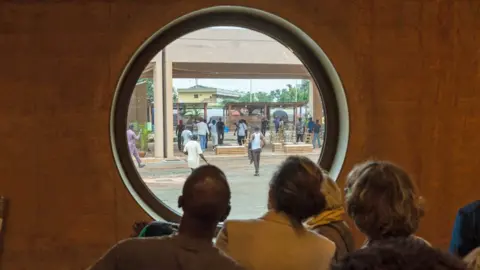
The nation's impressive new West African Art Museum (Mowaa) has found itself in the crosshairs of local power politics during the week it was supposed to – but failed – to welcome visitors to the visitors for the first time.
The Grand Vision
The six-hectare campus is located in the center of Benin's urban center, administrative center of the southern state of Edo – and includes an archaeological dig and buildings designed by celebrated dual heritage architect Sir David Adjaye, particularly noted for the Smithsonian African American Museum that began operations in the US capital in 2016.
It has been five years in the development – and is envisioned to showcase both the past and the present of artistic expression in the area famous for the Benin Bronzes, historical pieces stolen from the king's palace by British soldiers in the nineteenth century.
Preparation and Promise
It is impressive – and before the planned opening, Mowaa was active with workers determined to prove it is a place that can match renowned art institutions in the Western world.
Internally art restorers carefully unwrapped art pieces from secure wrapping, inspecting each artifact and taking thorough documentation before placing them on display surfaces and bases.
Specialists adjusted temperature regulation systems. In the research lab, staff members set up devices designed to conserve centuries-old artefacts.
Investment and Economic Plans
The initiative has been the concept of entrepreneur Phillip Ihenacho – now Mowaa's executive director.
"I want us to have a major economic impact on area populations around here," he explained to the press, adding that he wanted to make this urban center "an arts hub."
Mowaa, a non-profit local organization, aims at establishing over 30,000 employment opportunities and contributing over $80m each year to the area arts sector through alliances and programming.
Investment and Administrative Problems
It has required $25m to reach this point – money gathered from different supporters, such as the French and German governments, the UK museum and the local administration.
But currently the local government has pulled the rug from below it – terminating the utilization of the site on which the building was erected.
An official representative explained this was because in the early agreements it had called itself EMOWAA – and it had since removed "the state identifier" from its title.
Demonstrations and Government Action
This declaration was preceded by rallies on Sunday, when protesters stormed the facility calling for it be named the Museum of the Benin Kingdom.
A boisterous crowd confronted overseas dignitaries at the venue before the inauguration – compelling them to be quickly removed under security protection.
National leader Bola Tinubu has additionally become involved to work to address the conflict, creating a high-level committee to manage the situation.
Administrative Challenges
But why has this turned into so politicised – and such a PR disaster?
The majority of it comes down to internecine rivalries at a area administrative level, as it was the former state leader Godwin Obaseki – whose administration concluded last year – who was a key supporter of the museum.
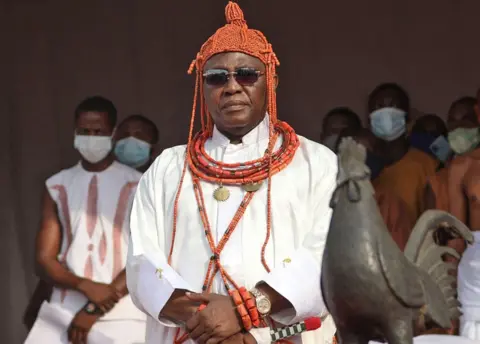
And it looks like the government of the recently elected official, a strong supporter of the local traditional ruler, referred to as the Oba, may seek greater involvement in the project. The protesters on Sunday, for case, were demanding that the institution be put under the authority of Oba Ewuare II.
The Cultural Artifacts Debate
This highlights the contentious issue of the cultural artifacts, one of the continent's most renowned artistic heritage.
Because though the museum does finally welcome visitors, these objects will be noticeably missing.
They are metal, ivory and timber sculptures that once embellished the monarch's home of the historical empire before British soldiers stole them in the colonial era during a punitive expedition.
Today, many continue to be spread across galleries in the West -- including the London museum, European center and the American museum.
Return Initiatives
Their return has become one of the most disputed conversations in the worldwide cultural sector. About 150 have currently been returned – and further are scheduled to be repatriated.
When ideas for the institution in the urban center were first announced in the pre-pandemic era, the influential figures on the national arts community expected it would become their perfect venue – a advanced facility to show them off to the international community.
But the issues became confused recently after the federal government declared that the traditional ruler would be the rightful owner of any returned bronzes – and the palace pushed for a museum under the monarch's supervision, opposing the preferences of Obaseki.
Political Navigation
This left Mowaa in a difficult situation: expressing a clear stance on return while being careful on ownership – and emphasising its broader vision, which led to|c


